Parkinson’s has no cure yet. There is growing evidence that exercise helps people live better with it. In one of the largest studies of Parkinson’s, people who exercised at least 2.5 hours a week had a slower decline in quality of life, and programs that lasted more than six months did better than short ones. Every finding below links to its source.
What the studies found about exercise and Parkinson’s
2.5 hours a week was linked to a slower decline
People with Parkinson’s who exercised at least 2.5 hours a week had a slower decline in quality of life. That finding comes from the Parkinson’s Outcomes Project, one of the largest clinical studies of Parkinson’s.
Exercise programs that lasted more than six months brought bigger gains in balance and mobility than programs of two or ten weeks, whatever the intensity.
High-intensity treadmill exercise may be safe early on
The SPARX trial followed 128 people newly diagnosed and not yet on medication. Researchers concluded high-intensity treadmill exercise may be safe to prescribe at this stage, and called for a larger trial to test how much it helps.
In one study, people who pedaled a stationary bike 30 percent faster than their preferred pace gained aerobic fitness, and improvements in movement and dexterity lasted for weeks after they stopped.
It doesn’t have to be running. In one study, twice-weekly tango classes helped people with Parkinson’s improve motor symptoms, balance and walking speed.
Researchers are still working out how long these benefits last, so expect this page to change as the science does.
Before you start
This page is educational. It isn’t medical advice, and Run With Parkinson’s is not a medical organization. Talk with your doctor before starting or changing an exercise program, and ask about a physical therapist who specializes in Parkinson’s. Exercise in a way that is safe for you, and know your limits.
What kinds of exercise help?
The Parkinson’s Foundation points to four kinds of exercise: aerobic activity; strength training; flexibility; and a fourth that combines balance, agility and multitasking.
If you’ve been less active, walking is a good place to start. The most important thing is to do it regularly.
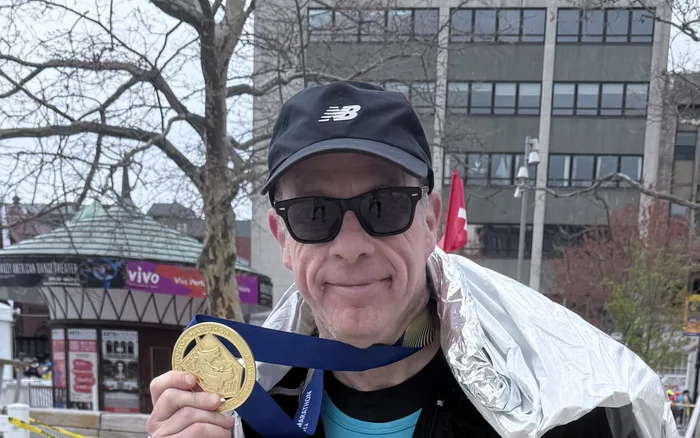
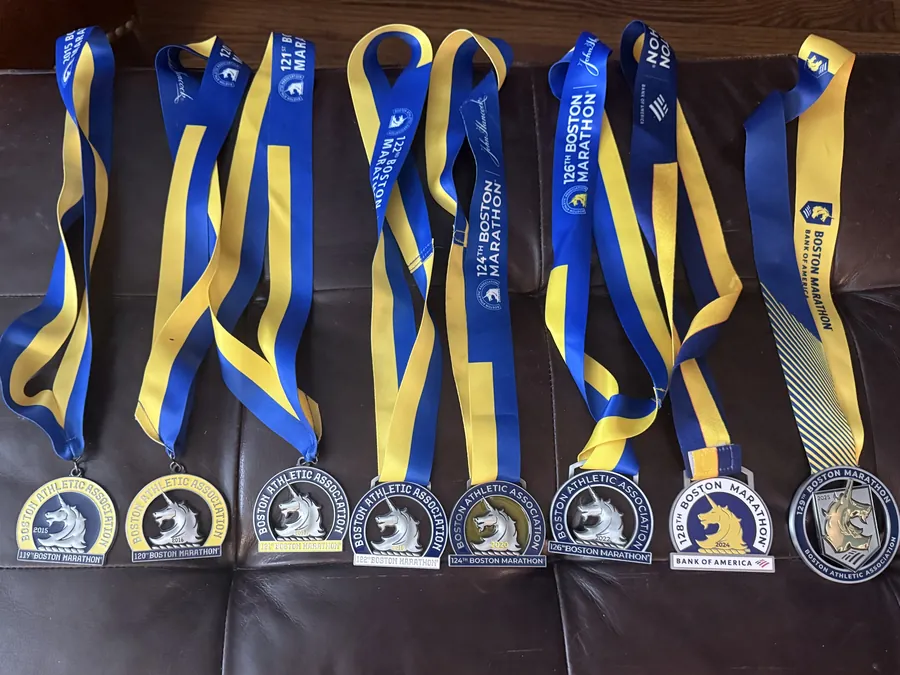
Dan ran the fastest marathon of his life after his diagnosis. Read his story.
Questions
How much exercise helps with Parkinson’s?
The Parkinson’s Foundation reports that people with Parkinson’s who exercised at least 2.5 hours a week had a slower decline in quality of life. That finding comes from the Parkinson’s Outcomes Project, one of the largest clinical studies of Parkinson’s. The most important thing is to exercise regularly.
What kinds of exercise help with Parkinson’s?
The Parkinson’s Foundation points to four kinds: aerobic activity, strength training, flexibility, and a fourth that combines balance, agility and multitasking. It doesn’t have to be running. In one study, twice-weekly tango classes helped people improve motor symptoms, balance and walking speed. Walking is a good place to start.
Is high-intensity exercise safe with Parkinson’s?
Early research is encouraging. The SPARX trial followed 128 people newly diagnosed and not yet on medication, and researchers concluded high-intensity treadmill exercise may be safe to prescribe at that stage. They called for a larger trial to test how much it helps. Talk with your doctor before you start.
Does exercise slow Parkinson’s down?
That hasn’t been proven. What studies do show is that people who exercised at least 2.5 hours a week had a slower decline in quality of life. Researchers are still working out what exercise does to the disease itself, so this page will change as the science does.
How long should an exercise program last?
Longer seems better. Exercise programs that lasted more than six months brought bigger gains in balance and mobility than programs of two or ten weeks, whatever the intensity. In another study, people who pedaled 30 percent faster than their preferred pace saw improvements that lasted for weeks after they stopped.